
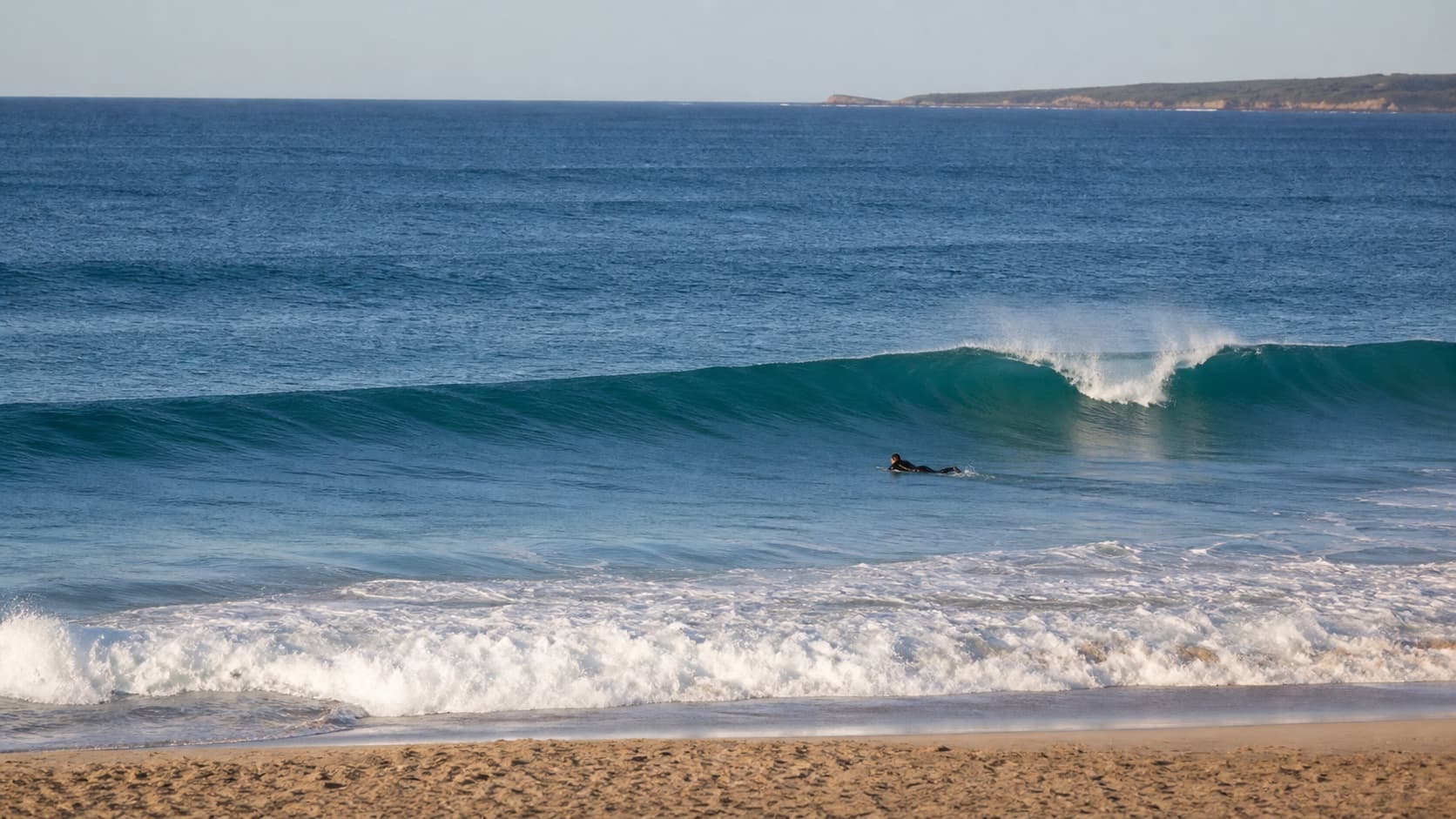
Surfing is harder to record than field sport because the subject is distant, the ocean background constantly moves and several surfers may wear similar wetsuits. A useful setup begins with reliable identification and an unobstructed angle, not maximum zoom.
Check land access, tide and hazardous-surf warnings before placing equipment. A dry rock or sand position can become unsafe as sets and water levels change.
Choosing the camera position
| Position | Strength | Risk or limitation |
|---|---|---|
| Elevated headland or platform | Clear line of sight and less overlap | Access, wind and cliff-edge hazards |
| Beach aligned with peak | Easy visual connection to take-off | Low angle and people crossing frame |
| Down-the-line angle | Shows manoeuvre path and wave face | Harder to see take-off depth |
| Front-on angle | Shows lateral movement and wave shape | Surfer can be hidden by lip or whitewater |
Practical camera setup
- Use a stable tripod and hang no loose weight that can swing in wind.
- Keep sand away from leg locks, lens mechanisms and phone ports.
- Use optical zoom before relying on heavy digital zoom.
- Leave space ahead of the surfer in the direction of travel.
- Choose a frame rate that supports the intended slow motion and available light.
- Lock focus or exposure only after testing that the surfer remains usable across the ride.
- Record set-up notes so the angle can be repeated on another day.
Identifying the correct surfer
Use board colour, wetsuit panels, a competition jersey or an agreed signal before paddling out. Begin recording before the take-off rather than trying to find the surfer after they stand. In a crowded lineup, keep a wider reference view until identity is certain, then tighten gradually.
For coaching, capture the paddle, entry and first movement as well as the major manoeuvre. Those earlier moments often explain why a section was reached late or with insufficient speed.
Official rules and related Trackd guides
Frequently asked questions
Where is the best place to film surfing?
A stable elevated shore position with a clear view of the take-off and ride is ideal, provided access and changing surf conditions are safe.
Should I zoom tightly on the surfer?
Not initially. Leave enough surrounding wave to follow direction changes and retain the surfer when the ride accelerates.
What part of the wave should I record for coaching?
Include paddling, entry, take-off, line choice and the full ride—not only the biggest manoeuvre.