
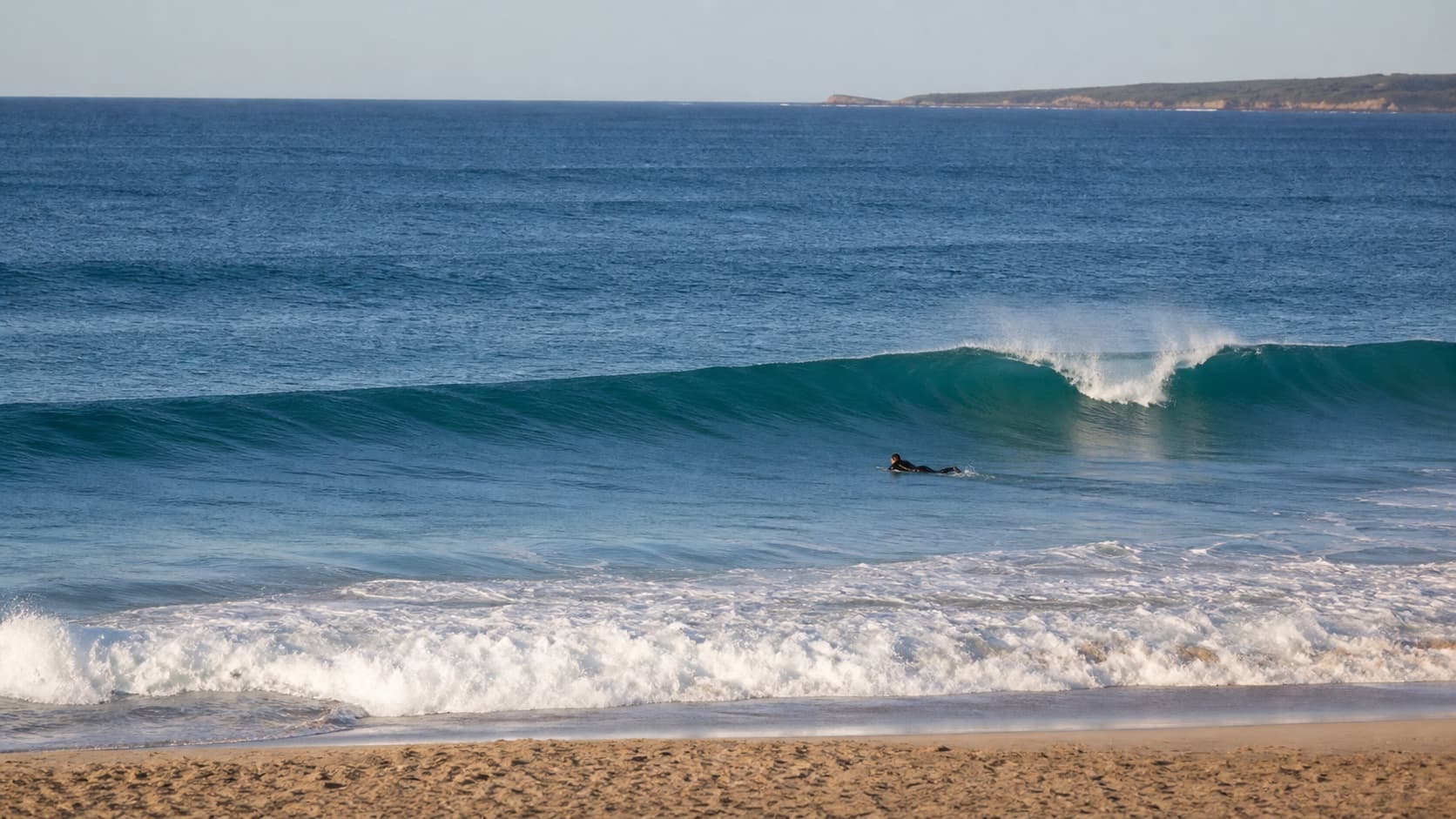
Video can reveal timing and positioning that feel different in the water. It is most useful when the camera shows the surfer in relation to the whole wave, not only a tight crop of the upper body.
Compare like with like. A late take-off on a steep set wave should not be judged against an easy shoulder on a smaller wave without accounting for the different opportunity.
Six-phase review
| Phase | Question to ask | Visible cue |
|---|---|---|
| Wave selection | Was this wave suited to the goal? | Peak, direction, open face and crowd |
| Paddle and entry | Was speed created before the wave arrived? | Stroke timing and board trim |
| Take-off | Was the pop-up early and controlled? | Hands, feet and board angle |
| First line | Did the surfer choose useful space? | High line, bottom path or stalled section |
| Speed generation | Did movement match the wave's power? | Compression, extension and rail engagement |
| Completion | Was the manoeuvre landed with control? | Exit direction, balance and next section |
Normal speed before slow motion
Watch the complete ride at normal speed first. This preserves rhythm and makes hesitation visible. Then use slow motion for a specific moment such as foot placement, rail transition or the board's direction at the top of a turn.
Avoid freezing a single awkward frame and treating it as the entire technique. Good movement passes through temporary shapes; timing and sequence are what matter.
Turn observation into practice
- Select one recurring pattern across several waves.
- Describe the behaviour without judgement.
- Choose one external cue or task for the next session.
- Match the practice conditions to the targeted movement.
- Film again from a comparable angle before deciding whether it changed.
- Use a qualified coach for feedback beyond your experience level.
Official rules and related Trackd guides
- International Surfing Association rulebook — Competition criteria and context
- Bureau of Meteorology — Waves and swell — Condition context
- How to film surfing from shore
- How surfing competitions are scored
Frequently asked questions
What camera angle is best for surfing analysis?
A stable shore angle that shows the surfer, take-off zone and full wave face provides the most tactical and technical context.
Should every ride be reviewed in slow motion?
No. Start at normal speed and use slow motion only for a specific timing or positioning question.
How many technique changes should I make at once?
Usually one clear priority per session is easier to practise and evaluate than a long list.