
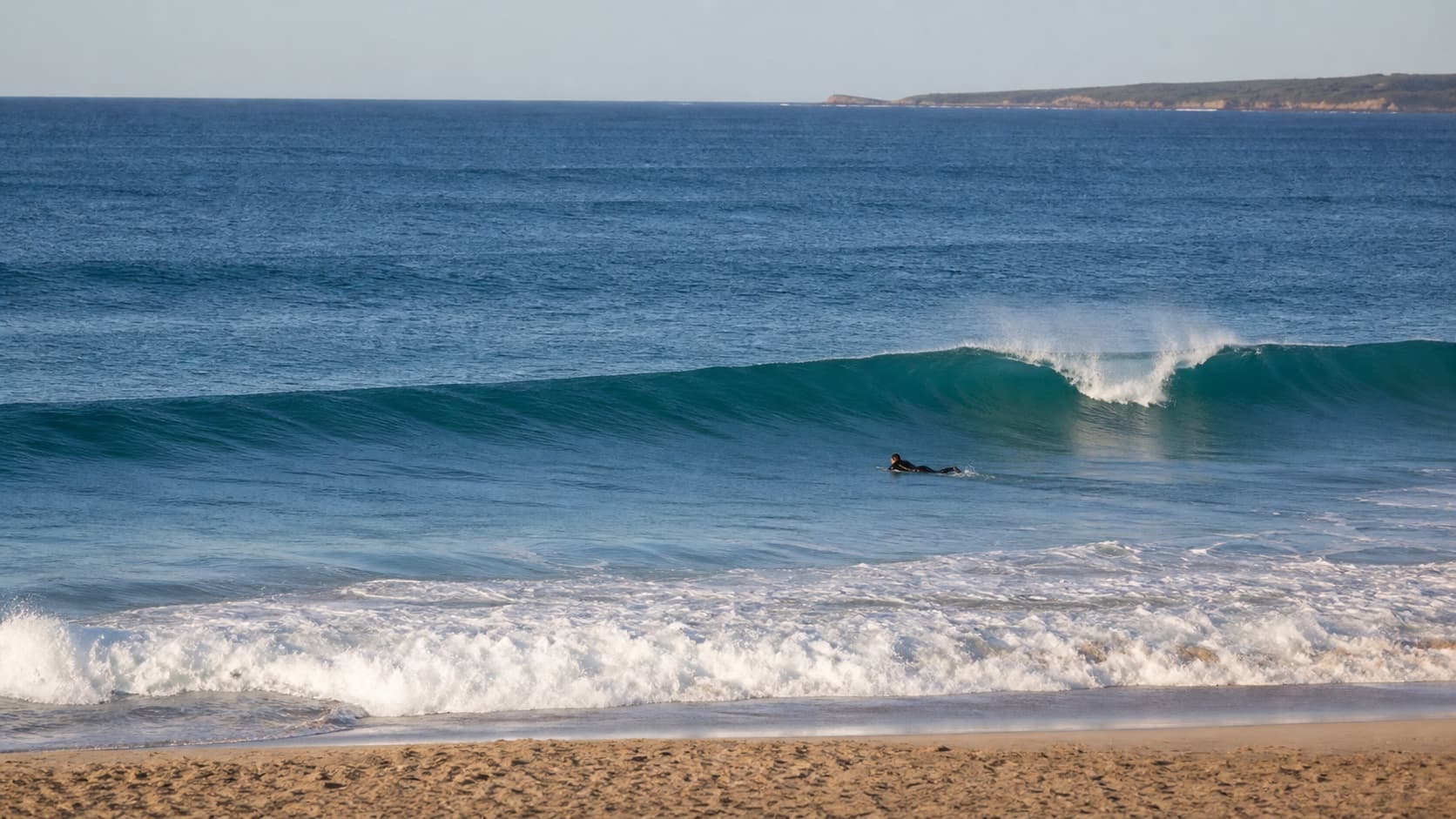
Swell forms when sustained wind transfers energy into the ocean, often far from the beach. It can travel thousands of kilometres before reaching shallow water. Local wind waves, also called sea or chop, are generated closer to the observation point.
Forecast wave height is not a promise that every wave will be that size. The Bureau of Meteorology uses significant wave height in marine forecasts, while individual waves vary and occasional waves can be much larger.
The five forecast ingredients
| Ingredient | What it describes | Why surfers watch it |
|---|---|---|
| Swell height | Average size of the swell component | Indicates incoming scale, not exact breaking height |
| Swell period | Time between wave crests | Longer periods generally carry more energy |
| Swell direction | Direction the swell travels from | Determines which beaches receive or shelter from it |
| Wind | Local speed and direction | Changes surface texture and wave shape |
| Tide | Changing water level | Changes where and how a break works |
Why swell period matters
Period is measured in seconds between crests or troughs. Longer-period swells have travelled and organised differently from short local wind waves and generally carry more energy. As they enter shallow water they slow, steepen and increase in height before breaking.
A long lull does not mean the swell has finished. Waves travel in sets, and the time between sets can vary from minutes to much longer. Observe several cycles before judging a break or choosing where to enter.
Forecast first, observe second
- Check official weather and hazardous-surf warnings.
- Compare primary and secondary swell directions with the beach orientation.
- Review wind direction and expected changes during the session.
- Check tide times and understand the local hazards at different levels.
- Watch the beach from shore for sets, currents, crowd movement and safe entry points.
- If conditions exceed your ability, do not enter simply because the forecast looked manageable.
Official rules and related Trackd guides
Frequently asked questions
Is swell height the same as breaking wave height?
No. Breaking height depends on period, direction, seabed, tide and local exposure as well as the offshore swell measurement.
What does a longer swell period mean?
It generally means more energetic, organised swell, but the local break determines the final wave quality and hazard.
Why are waves bigger than the forecast?
Forecasts describe statistical sea conditions, not every individual wave. Sets vary, and occasional waves can be substantially larger than the significant height.