
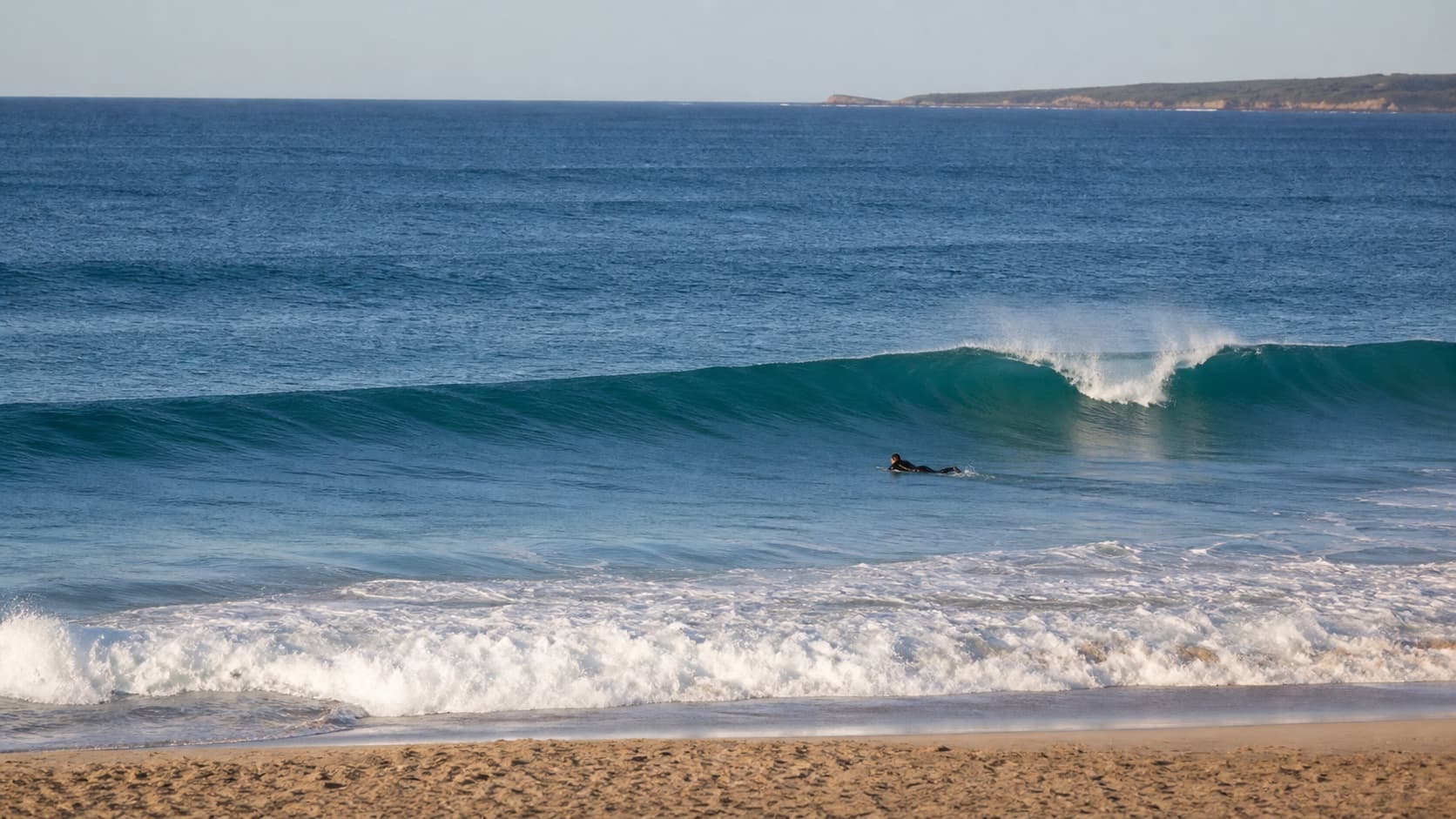
Tides do more than raise and lower the shoreline. They can expose hazards, cover a useful sandbank, change current through channels and alter whether a wave spills, plunges or fails to break in its usual place.
A tide table gives predicted water level and time, not wave quality. Wind, swell direction, period and recent movement of sand still determine what happens at the beach.
Common effects—not universal rules
| Tide stage | Possible effect | Potential concern |
|---|---|---|
| Low | Reveals shallow banks and reef shape | Dumping waves, exposed rocks or insufficient depth |
| Rising | Adds water and changes current | Rapidly changing entry and exit |
| High | Covers banks and reaches farther up beach | Backwash, shorebreak or waves not breaking normally |
| Falling | Removes water and can strengthen channel flow | Changing currents and exposed hazards |
Why local bathymetry controls the result
Bathymetry is the underwater shape of the seabed. Beachbreak sandbars move, sometimes after a storm or large swell. Reef and point breaks are more fixed but can be highly sensitive to water depth. That is why a remembered tide recommendation can become unreliable at a shifting beachbreak.
Observe where waves break, where water returns seaward and whether the planned exit remains usable. An outgoing tide combined with a rip or channel may make returning to shore more difficult.
A safer way to learn a break
- Check official tide times, weather warnings and surf hazards.
- Visit at different tide stages without assuming you must enter.
- Ask qualified local lifeguards or instructors about hazards.
- Note fixed landmarks rather than relying only on an app label.
- Reassess after storms because sand and access can change.
Official rules and related Trackd guides
Frequently asked questions
Is high tide better for surfing?
Not universally. It may add useful depth at one break and stop waves breaking well or create backwash at another.
Is low tide dangerous?
It can expose shallow sand, reef or rocks and create dumping waves. The hazard depends on the break and conditions.
Does a rising tide always improve waves?
No. A rising tide changes water depth and current, but wave quality depends on the individual break and the rest of the forecast.