
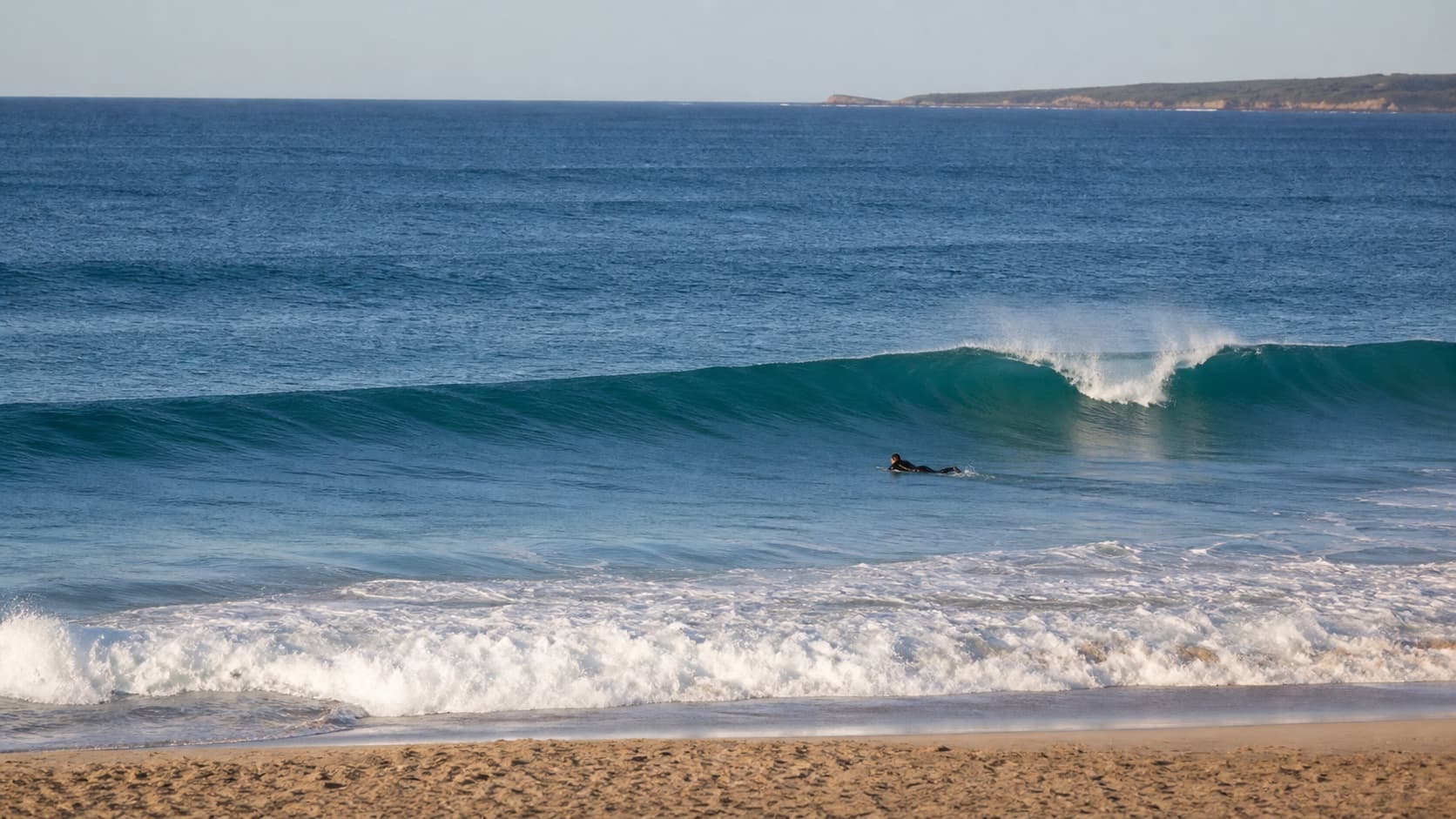
Rip currents are a leading hazard on Australian beaches. Surfers sometimes use channels to paddle out, but recognising a current does not make it harmless. Its speed, direction and exit can change with waves, tide and the shape of the beach.
Look from an elevated position if available and observe several sets. A calm-looking gap between breaking waves may be a deeper channel carrying water seaward rather than the easiest or safest place to enter.
Common visual signs
- A darker or deeper-looking channel.
- A gap with fewer consistently breaking waves.
- Sandy or discoloured water extending through the surf zone.
- Foam, seaweed or debris moving seaward.
- A noticeable flow relative to fixed points on the beach.
If you are caught in a rip
Beachsafe advises staying calm, conserving energy and seeking help by raising an arm and calling out. Options can include floating with the current or swimming parallel to the beach or toward breaking waves, depending on conditions and ability.
Do not exhaust yourself trying to sprint directly against a strong current. Keep your board as flotation where possible, signal early and follow lifeguard instructions. In an emergency, call Triple Zero in Australia.
Before entering the water
- Check Beachsafe information, weather warnings and local signage.
- Prefer patrolled locations and speak with lifeguards about hazards.
- Identify more than one exit and a fixed landmark for drift.
- Watch how other water users move, but do not assume their ability matches yours.
- If you cannot confidently recognise the conditions, seek qualified instruction.
Official rules and related Trackd guides
Frequently asked questions
Do rips pull people underwater?
Rip currents primarily carry water away from shore; the main danger is being moved offshore and becoming exhausted or panicked.
Should you always swim parallel to escape?
It is one recognised option, but conditions vary. Stay calm, conserve energy, signal for help and follow current official Beachsafe guidance.
Is a gap in breaking waves always a rip?
No, but it is an important warning sign to assess with water colour, debris, movement and local knowledge.