
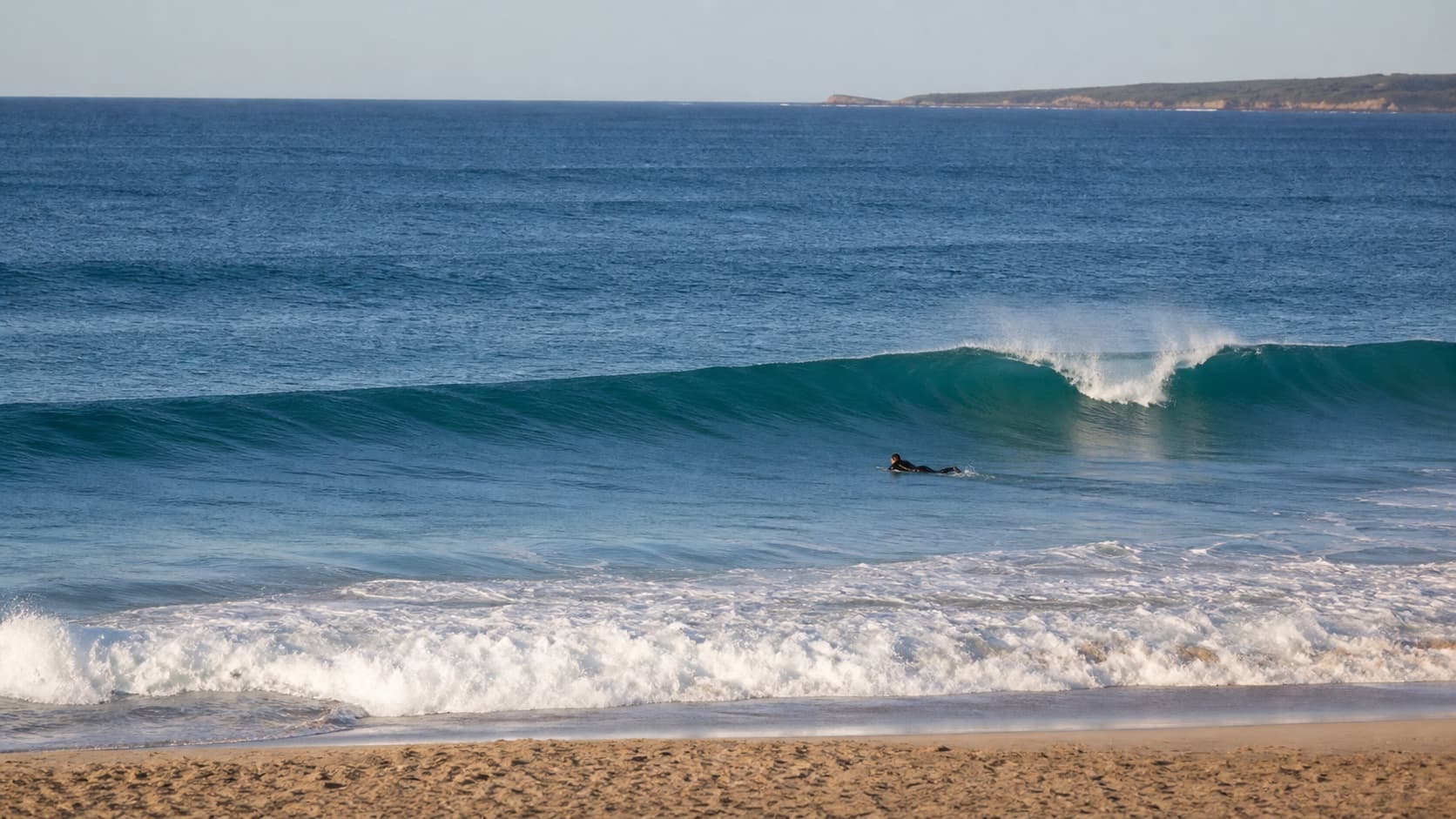
The same compass direction can be offshore at one beach and cross-shore at another because coastlines face different ways. Interpret the forecast relative to the direction the beach faces, not as a universal good or bad wind.
Light offshore wind may improve shape, while strong offshore wind can make paddling, take-off visibility and returning equipment more difficult. Conditions that look clean are not automatically safe.
Wind directions at a glance
| Wind | Direction relative to beach | Common effect |
|---|---|---|
| Offshore | Land toward ocean | Smoother faces and spray blowing seaward |
| Onshore | Ocean toward land | Chop, crumbling lips and disorganised surface |
| Cross-shore | Along the beach | Uneven texture and drift along the lineup |
| Cross-offshore | Diagonal from land | Can be clean with some lateral drift |
| Cross-onshore | Diagonal from ocean | Often textured with uneven sections |
Why wind strength changes the answer
A light wind may barely disturb the surface. Strong wind can create its own local waves, move a surfer down the beach and make communication or rescue harder. Gusts can be substantially stronger than the forecast average, so check warnings and observe the water before entering.
An offshore wind can hold a breaking lip up longer, but it can also blow spray into a surfer's vision and resist paddling into the wave. Beginners should not treat 'offshore' as a standalone green light.
Using wind in a session plan
- Check whether wind direction is forecast to change during the session.
- Identify exits if current and cross-shore wind move you down the beach.
- Match conditions to ability rather than chasing clean appearance alone.
- Use a land reference to monitor drift while in the water.
- Leave the water if visibility, control or returning to shore becomes uncertain.
Official rules and related Trackd guides
Frequently asked questions
Is offshore wind always best for surfing?
No. Light offshore wind often improves shape, but strong offshore wind can create control, visibility and safety problems.
How do I know if a wind is offshore?
Compare the wind's travel direction with the orientation of that specific beach. Offshore wind moves from land toward the sea.
Can you surf in onshore wind?
Yes, but waves are often bumpier and less organised. Suitability depends on strength, wave conditions and ability.